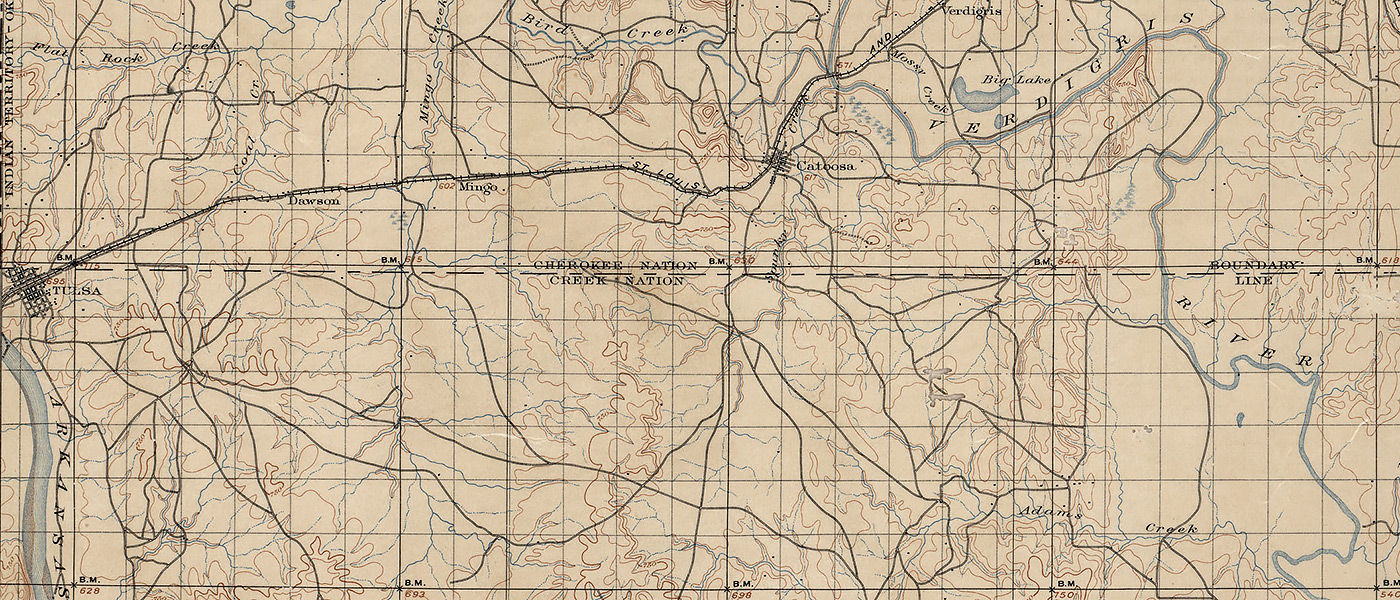
Antique topographic map of the railroad line into Tulsa from St. Louis.
Note that Tulsa was not all that much bigger than Catoosa at the time of this map.
In the Beginning
Was the Railroad.
Without the railroad Tulsa would have been a suburb of Sapulpa.
Everything that Tulsa has become was made possible because of the coming of rail service.
Tulsa was just a small cattle town that had grown from a Muscogee (Creek) settlement. We were small and didn't amount to much, but the founders of the city had high aspirations for what we could become as a town …and for what they could become if Tulsa grew and prospered. According to stories told, there was so much competition among the early founders of the city for leadership that nothing much ever got done to promote the town. There was so much competition for leadership and power that any one group’s efforts to gain advantage undermined the efforts of other groups. At some point people apparently just gave up. It was at this point, once discouragement set in, that different factions began to put aside their differences and to come together in unity to work for the common good. This coming together was the point at which modern Tulsa took its roots. It was this spirit of togetherness and unity that helped us attract the railroad and that characterized us for decades to come.
For any community to grow in those days, it had to have rail service. This objective became the first goal for our emerging town leaders. It became their first and most strategic success.
Everything that followed in Tulsa’s development is owed to that first step of attracting rail service. It is hard for us today to imagine how important trains were, but in those days you traveled by train or you traveled by horseback. From an economic development perspective, the railroad was life or death for a town.
It is also hard to imagine today how much the railroad was at the center America's imagination. Our fascination with the railroad continued until air service started expanding and until the interstate highway system was constructed and rail passenger traffic began to die off.
All of the original parts of Tulsa’s downtown were built parallel to the railroad tracks. As the pictorial map following this paragraph shows, downtown was laid out parallel to the tracks. That's why the center of the city is not laid out on a north south and east west axis. The streets were laid out in relation to the railroad tracks because that was what was important to the city.
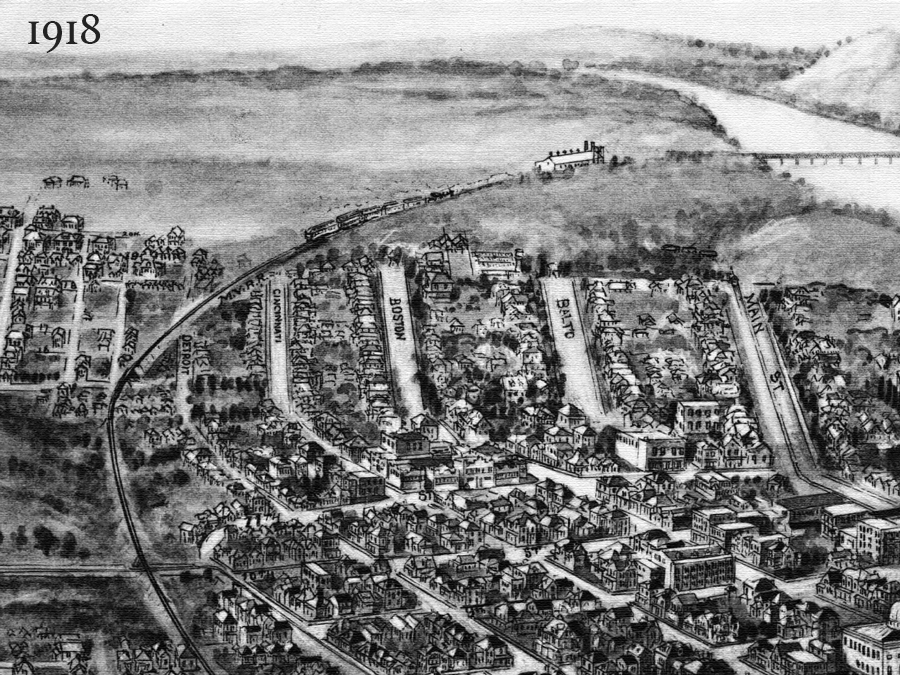
This pictorial map shows that the streets were built on a traditional North-South axis beginning with about 11th Street. On the map we also see a little train chugging through whant is now Maple Ridge, and indeed this was a working train line (the Midland Valley) until sometime in the 1970's).
My own personal childhood goes back to the era when the railroad reigned supreme in America. When I was a small child, my father would take me on walks to see the trains at the depot downtown, and we even once made a visit by car to the roundhouse in the rail yards in West Tulsa. He was certainly imbued with the romance of the railroad, but this was not unusual since everyone in the country saw the railroad as something magical. I inherited his fascination, and still love riding by train …but nowadays this is mostly limited to travels abroad.
Downtown Tulsa is still filled with railroad tracks, but mostly North of the primary business district and therefore we don’t much notice them. A closer search for the tracks circling downtown will reveal that a surprising amount of real estate inside the inner dispersal loop is made up a railroad land.
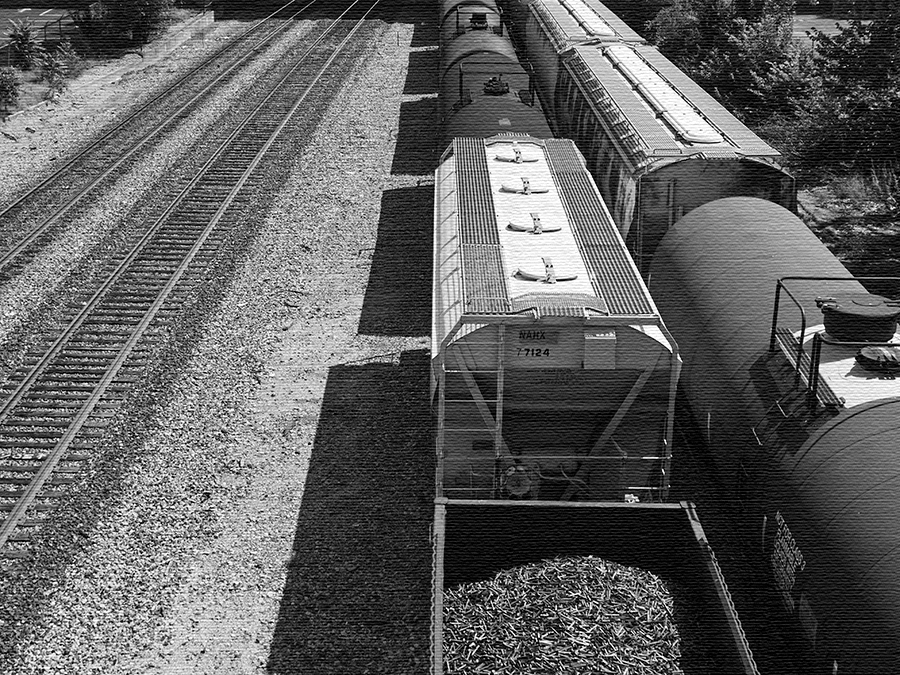
The tracks paralleling Archer are very active at all hours of the day. We are so accustomed to seeing the tracks that we never notice them. Passenger trains from across the nation used these tracks arriving at Tulsa's Union Depot. ("Union" in this sense refers to the "union" of different rail lines in a single passenger terminal.)
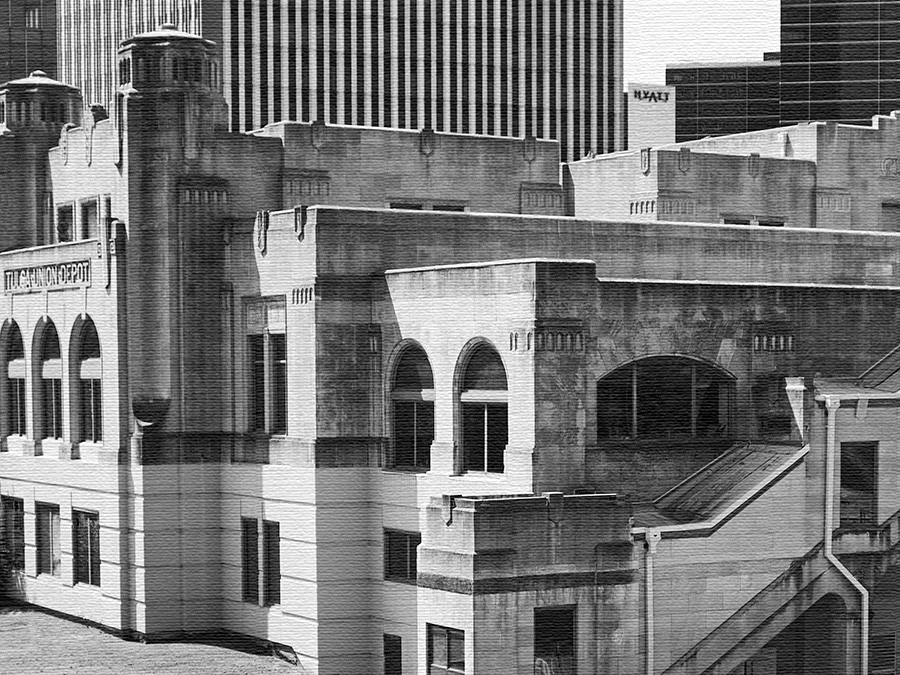
Tulsa's Union Depot was opened in 1931 and reflects the art deco style popular in Tulsa. The opening of a grand terminal like this one was a very big event in Tulsa's life.
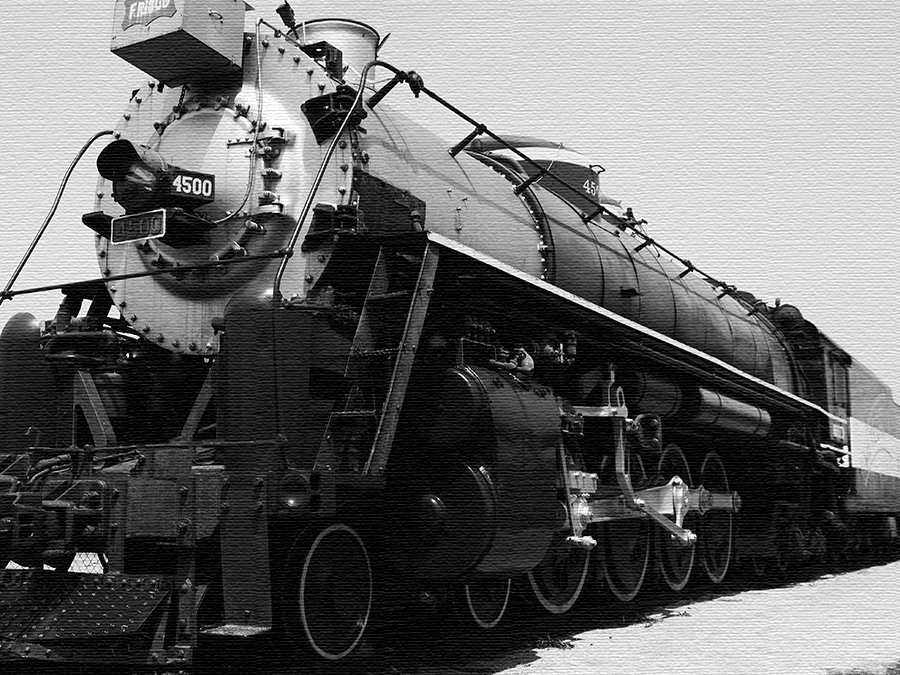
Powerful steam engines like this one carried passengers in speed and style from Tulsa to all corners of America.
This specific engine haulded the Meteor for the Santa Fe Railroad between Oklahoma City to St. Louis via Tulsa. It is on public display in West Tulsa.
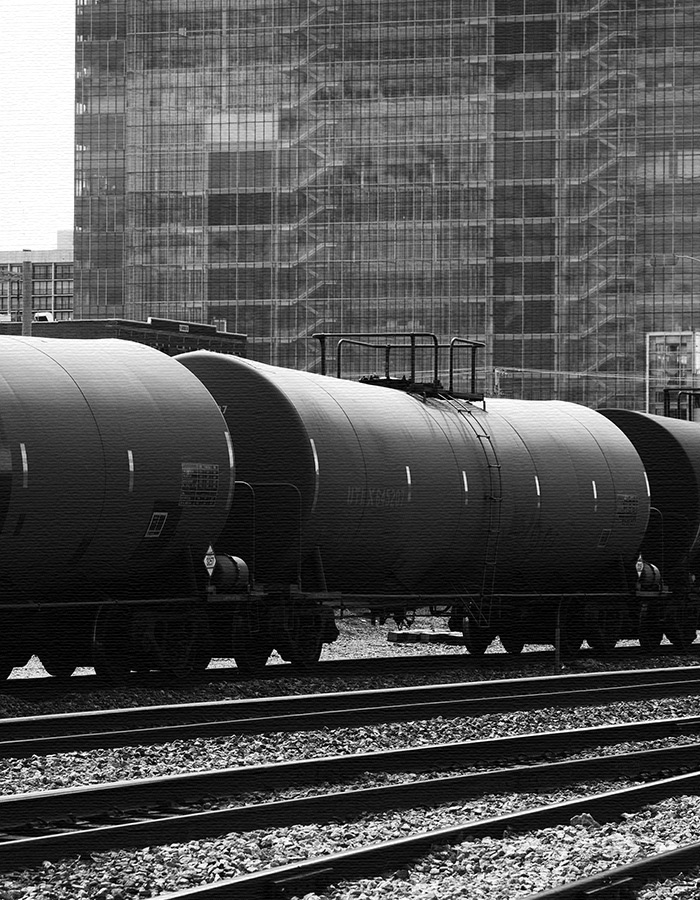
This photo show an oil tanker car in the foreground and Tulsa's tall City Hall building behind. It is a fitting reminder that oil and Tulsa, even after all these years, forms a tight alliance
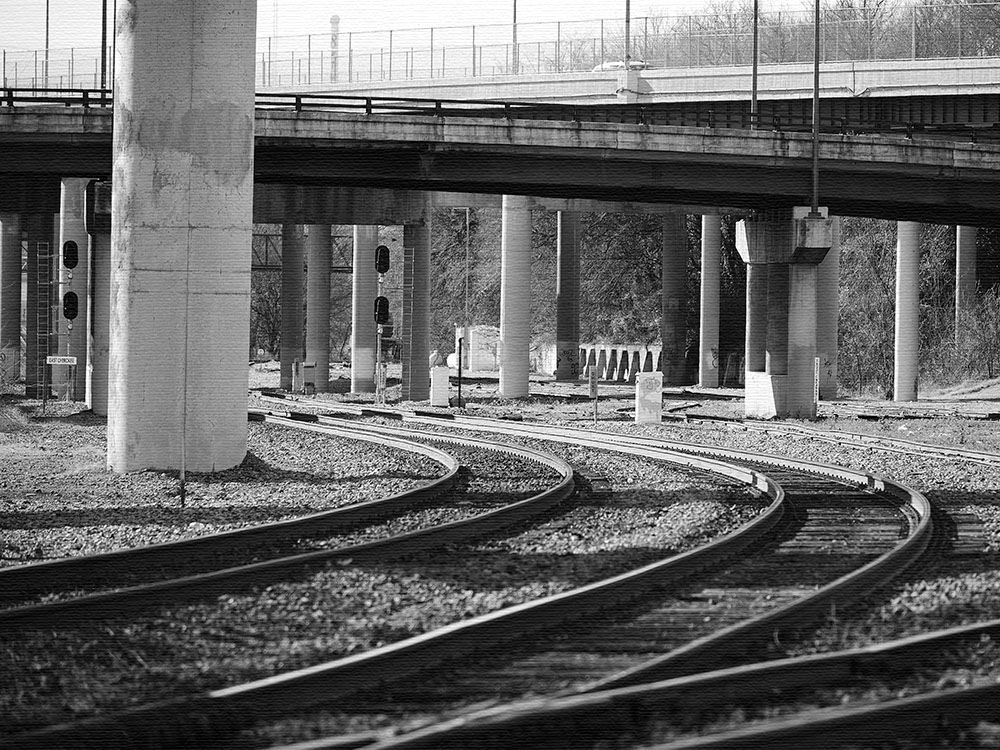
These are more examples of tracks in the downtown area. There is an extensive network that goes mostly unobserved.
Downtown Tulsa is still filled with railroad tracks, but mostly North of the primary business district and therefore we don’t much notice them. A closer search for the tracks circling downtown will reveal that a surprising amount of real estate inside the inner dispersal loop is made up a railroad land.
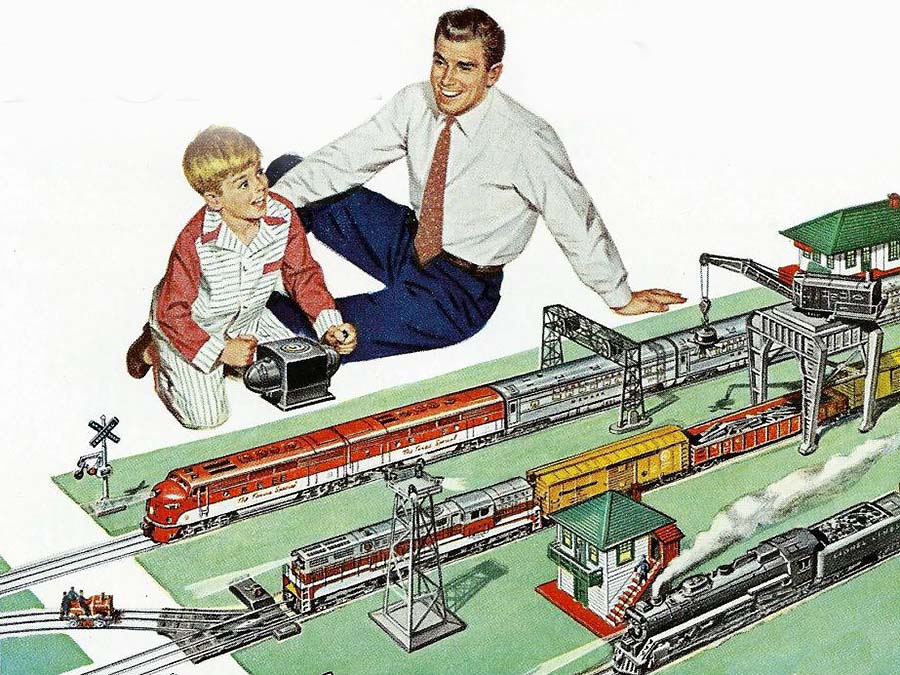
The post-war era was the golden age of the electric trains, a proof of our national romance with the railroad.
My own personal childhood goes back to the era when the railroad reigned supreme in America. When I was a small child, my father would take me on walks to see the trains at the depot downtown, and we even once made a visit by car to the roundhouse in the rail yards in West Tulsa. He was certainly imbued with the romance of the railroad, but this was not unusual since everyone in the country saw the railroad as something magical. I inherited his fascination, and still love riding by train …but nowadays this is mostly limited to travels abroad.
As a boy I had an electric train, of course. Almost every boy did. Mine was an American Flyer brand train, but the one pictured above is a Lionel (identifiable by the three rails; American Flyer tracks had two). It was a different era for toys back then. Chemistry sets were also popular then, but I don't think they are sold any more, probably out of product liability concerns. Erector sets were popular too. All these major toys required patience as well as imagination, qualities that video games do not require.

Prof. Rodger A. Randle
All photos are © Rodger Randle